
Garage Door Cable Replacement: Everything You Need to Know
A garage door cable is one of the most essential parts of your garage door system. Together with springs, these steel cables carry the weight of the door, ensuring safe and smooth operation. When a cable snaps, your garage door becomes unsafe to use and can’t function properly.
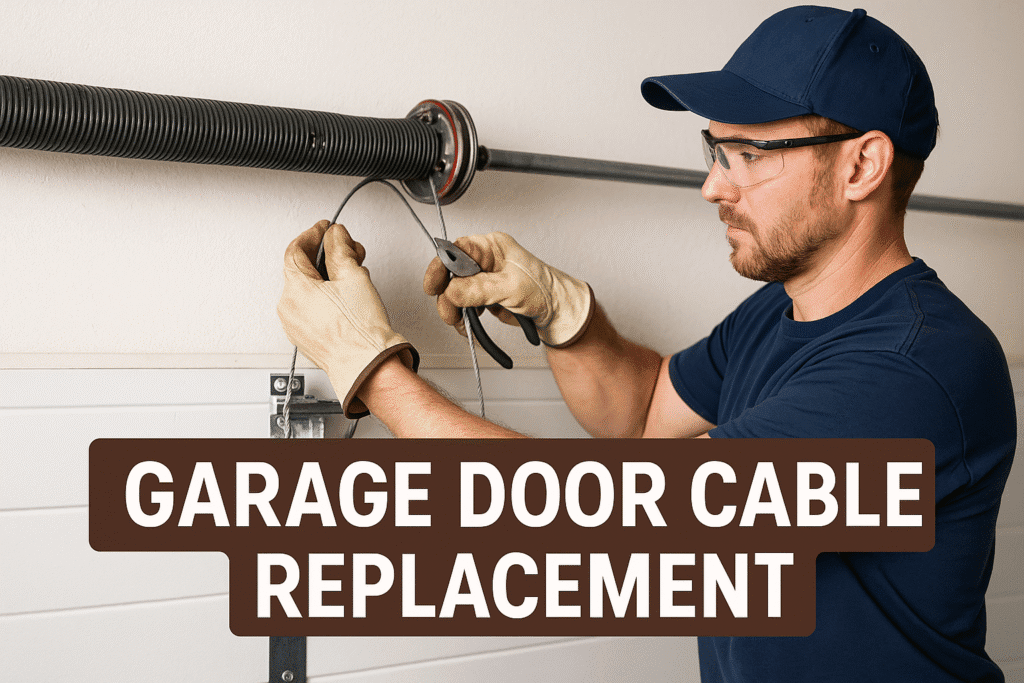
This guide will walk you through what garage door cables are, signs they need replacement, costs, safety concerns, and why hiring a professional is often the smartest choice.
What Are Garage Door Cables?
Garage door cables are heavy-duty steel wires that work with springs to lift and lower the door.
Main types of garage door cables include:
Lift Cables – Found in torsion spring systems, running from the drum to the bottom of the door.
Retaining/Safety Cables – Found in extension spring systems to prevent springs from flying if they break.
Extension Cables – Used in extension spring systems, connected to pulleys for smooth operation.
Without properly functioning cables, your garage door won’t open, won’t close, or may become dangerously unbalanced.
Signs You Need Garage Door Cable Replacement
Because of daily use, friction, and stress, cables deteriorate over time. Keep an eye out for these warning indicators:
Cables with visible degradation, such as fraying or rust, become weaker and may suddenly snap.
Door Won’t Open/Close: Proper lifting is impossible due to a broken wire.
A door that is uneven or crooked typically indicates that one of the cables has failed.
Loud Bang or Snap Sound: There is a noticeable sound produced when a cable breaks under stress.
Dangling or Loose Cable: Never disregard a disconnected cable.
Dangers of a Broken Garage Door Cable
A broken wire is dangerous in addition to being inconvenient.
Door Collapse Risk: The door may crash shut unexpectedly, causing harm to people or property.
Increased Stress on Other Components: Springs and tracks experience increased strain when cables malfunction.
Unsafe Do-It-Yourself Repairs: Because garage doors can weigh hundreds of pounds, replacing the cables without the right training can be harmful.
Garage Door Cable Replacement Process
If you’re wondering how professionals handle cable replacement, here’s an overview:
Disconnect opener power for safety.
Secure the door with clamps to prevent movement.
Release spring tension carefully (this is the dangerous part).
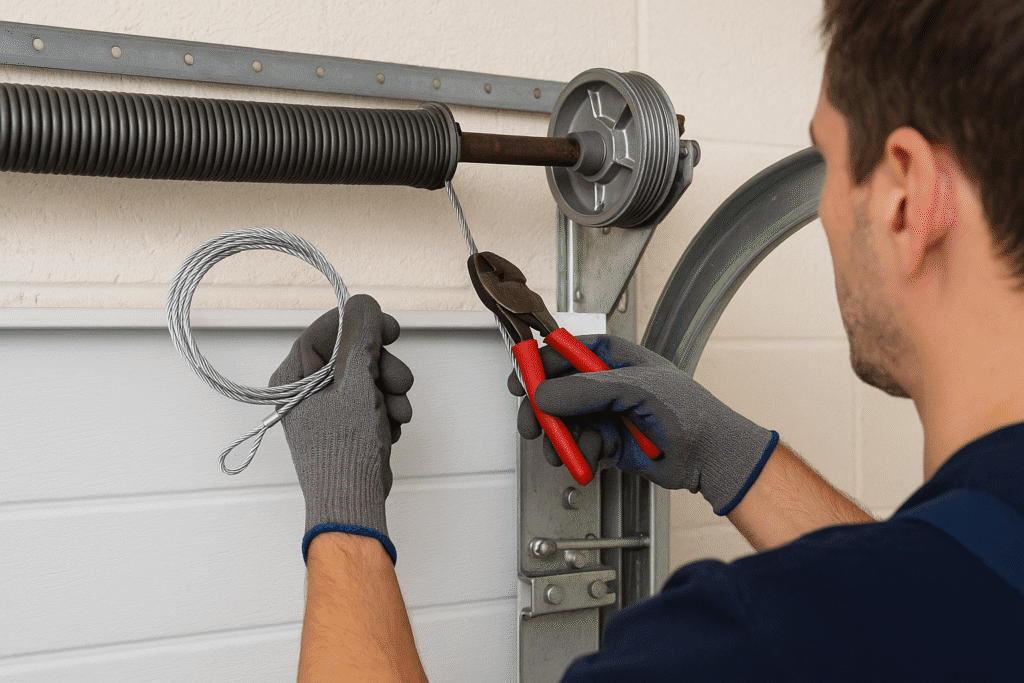
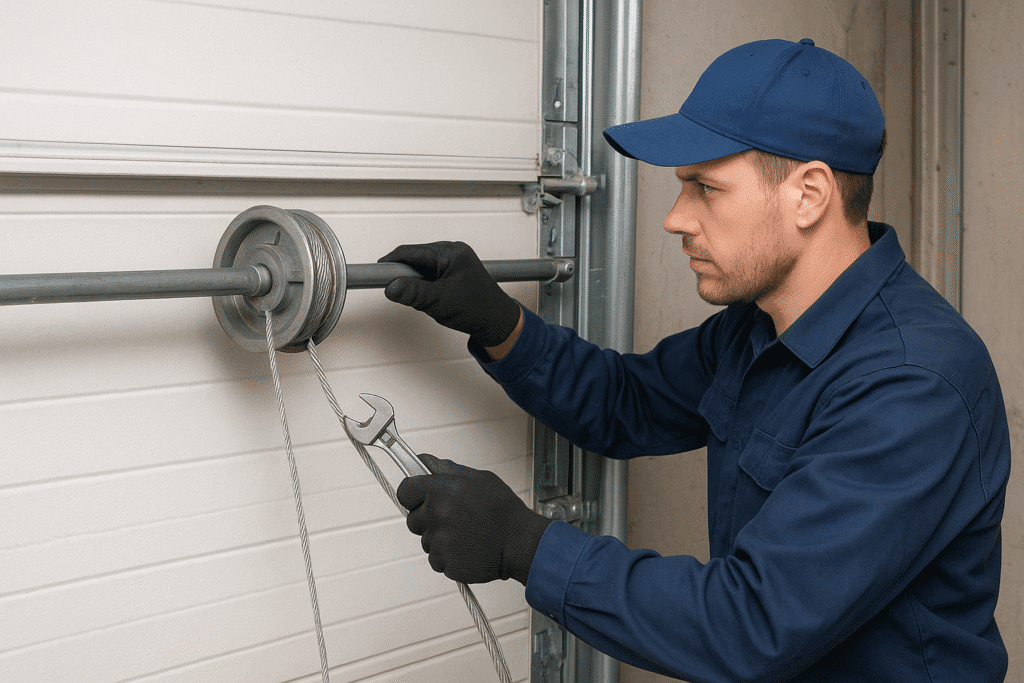
Remove damaged cables from the drum and bottom bracket.
Install new cables and ensure correct tension and alignment.
Test door balance and reconnect the opener.
⚠️ Important: Because of the extreme tension in garage springs, this job is not recommended for DIY unless you have experience.
DIY Garage Door Cable Replacement: Should You Try It?
While some handy homeowners attempt cable replacement themselves, it’s one of the riskiest garage door repairs.
Pros of DIY:
Save on labor costs.
Immediate fix if you already have parts.
Cons of DIY:
High risk of injury from springs under tension.
Incorrect installation can damage the entire system.
No warranty or professional guarantee.
For most homeowners, hiring a licensed garage door technician is the safest and most reliable choice.
How Much Does Garage Door Cable Replacement Cost?
Costs vary depending on door size, cable type, and whether you hire a professional.
DIY Cable Kits: $15 – $40 (parts only)
Professional Cable Replacement: $125 – $200 (labor + parts)
Emergency Same-Day Service: $200 – $300+
Considering the safety risks, the professional route is often worth the investment.
How to Prevent Cable Failure
Regular maintenance extends the life of your garage door cables:
Inspect cables twice a year for frays, rust, or slack.
Lubricate moving parts to reduce friction.
Check door balance to avoid uneven tension.
Schedule professional tune-ups annually.
By catching issues early, you can prevent sudden cable breakage and costly emergency repairs.
Cable Replacement vs. Full Garage Door Upgrade
Sometimes replacing cables alone isn’t enough. If your garage door is old or other parts are failing, a full replacement may be the smarter choice.
Cable replacement is best when:
The door and opener are in good condition.
Only cables show signs of wear.
Full garage replacement is better when:
The door is 15–20 years old.
Springs, tracks, and panels are also damaged.
You want modern features like insulation and smart openers.
Conclusion
Garage door cable replacement is an essential repair that restores safe and smooth operation. Since cables carry the full weight of your garage door, delaying replacement can be dangerous.
While DIY might seem appealing, the risks far outweigh the benefits. For most homeowners, hiring a certified technician ensures safe installation, long-lasting results, and peace of mind.
Stay proactive with maintenance, and your cables—and your entire garage system—will last much longer.
Pingback: 2025 Garage Door Bracket Replacement: Proven Repair Tips